DNA, or deoxyribonucleic acid, is the molecule that carries genetic instructions in living organisms. DNA plays a crucial role in aging through the gradual accumulation of damage over time.
DNA, the blueprint of life, contains all the genetic information necessary for growth, development, and functioning. It consists of two long strands forming a double helix, with each strand composed of nucleotides. These nucleotides pair specifically to encode genetic instructions.
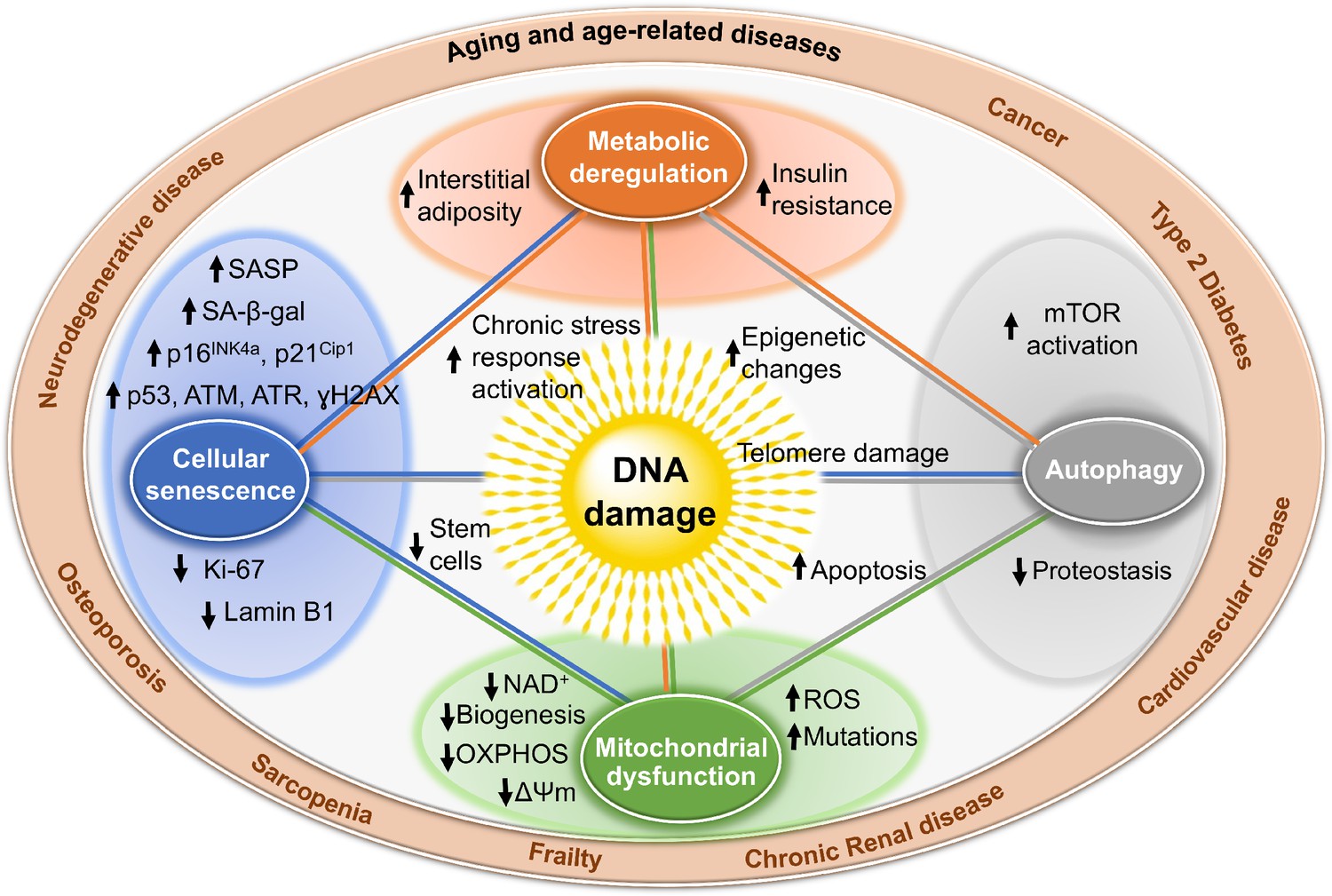
Over time, DNA accumulates damage due to environmental factors and cellular processes. This damage can impair cellular functions, leading to age-related diseases and physiological decline. Cells attempt to repair damaged DNA, but the efficiency of these mechanisms decreases with age. Understanding DNA’s role in aging can help develop strategies to mitigate age-related health issues.
Dna Function
DNA, or deoxyribonucleic acid, is the molecule that holds the genetic instructions for life. It serves as the blueprint for the development, functioning, growth, and reproduction of all living organisms. Understanding the function of DNA helps us grasp how it impacts aging and overall health.
Genetic Blueprint
DNA is often referred to as the genetic blueprint because it contains the instructions needed to build and maintain an organism. This blueprint is made up of sequences of four chemical bases: adenine (A), thymine (T), cytosine (C), and guanine (G). These bases pair up in specific ways:
- A pairs with T
- C pairs with G
The sequence of these bases determines the genetic information available for building and maintaining an organism. Errors in these sequences can lead to genetic mutations which may affect aging.
Protein Synthesis
One of the primary functions of DNA is to guide the process of protein synthesis. Proteins are essential for various functions in the body, including structural roles, enzyme activity, and signaling. The process of protein synthesis involves two main steps:
- Transcription: DNA is transcribed into messenger RNA (mRNA).
- Translation: mRNA is translated into a specific protein.
During transcription, the DNA sequence of a gene is copied into mRNA. This mRNA then travels out of the cell nucleus and into the cytoplasm, where ribosomes read the mRNA sequence to construct proteins. These proteins play crucial roles in cell function and repair, impacting how we age. The efficiency and accuracy of protein synthesis can decline with age. This decline can lead to the accumulation of damaged proteins and affect cellular function. Understanding this process helps us explore potential interventions to slow down aging.
| DNA Function | Impact on Aging |
|---|---|
| Genetic Blueprint | Mutations can accelerate aging. |
| Protein Synthesis | Decline affects cell repair. |
Credit: elifesciences.org
Dna Replication
DNA is the blueprint of life. It carries all genetic information. Aging is closely linked to DNA. One key process is DNA replication. This is how cells copy their DNA. Understanding DNA replication helps explain aging.
Replication Process
DNA replication begins with the unwinding of the double helix. Each strand acts as a template. New DNA strands form by pairing with the original strands. This creates two identical DNA molecules. The process ensures each new cell gets a complete set of DNA. Errors in DNA replication can cause mutations. These mutations may lead to aging and diseases. Cells have mechanisms to correct these errors. But sometimes errors slip through. This contributes to the aging process.
Enzymes Involved
Several enzymes play crucial roles in DNA replication. These enzymes ensure the process runs smoothly. The main enzymes involved include:
| Enzyme | Function |
|---|---|
| Helicase | Unwinds the DNA double helix |
| Primase | Creates RNA primers for DNA synthesis |
| DNA Polymerase | Builds the new DNA strand |
| Ligase | Seals gaps between DNA fragments |
These enzymes work together to replicate DNA. Helicase unwinds the DNA. Primase lays down RNA primers. DNA polymerase extends the new strand. Ligase seals any remaining gaps.
Dna Mutations
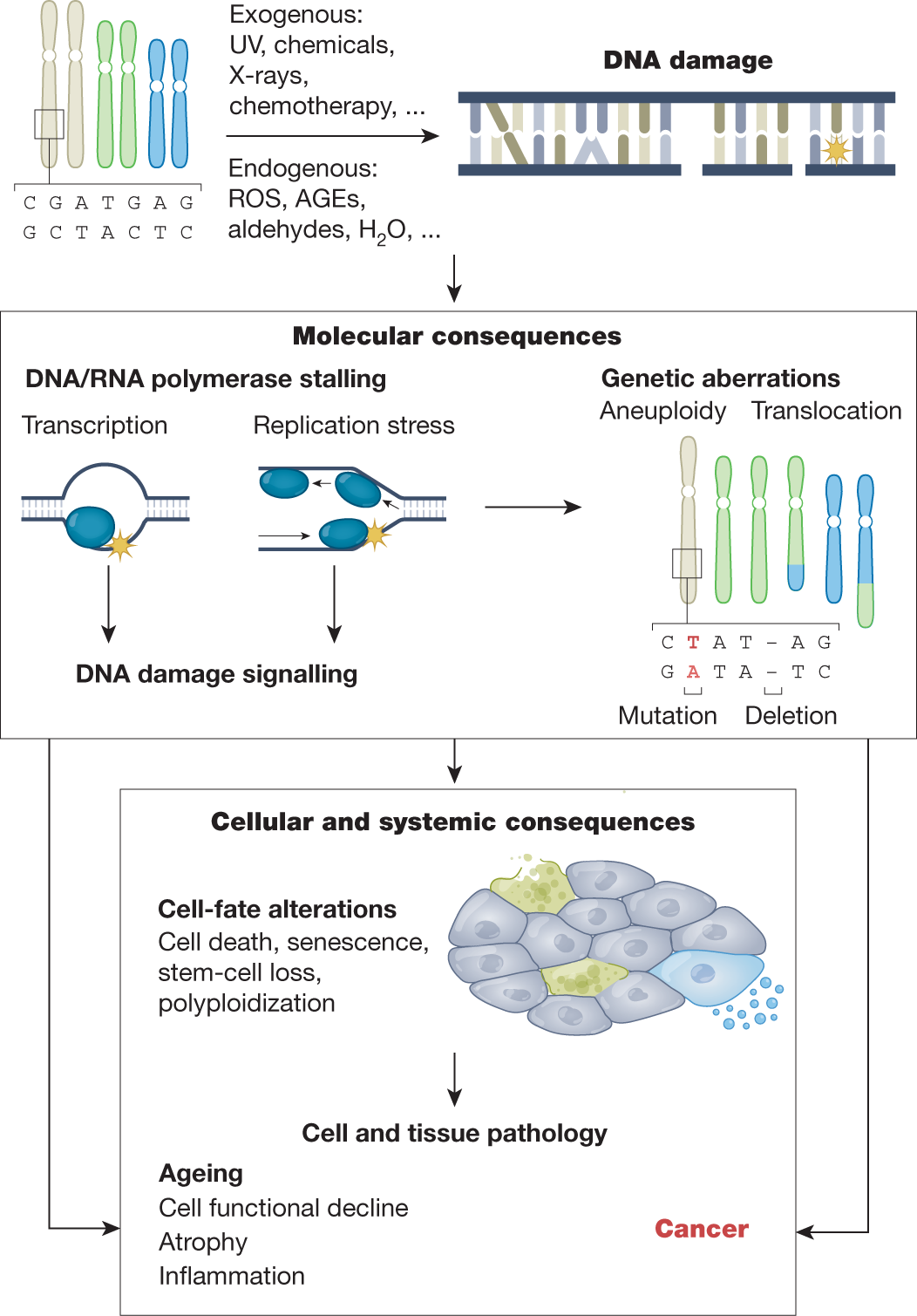
DNA mutations are changes in the DNA sequence. These changes can affect how cells function. They play a significant role in the aging process. Understanding these mutations is vital for studying aging.
Types Of Mutations
There are several types of DNA mutations. Each type can have a different impact on aging.
- Point Mutations: Changes in a single nucleotide base.
- Insertion Mutations: Extra nucleotides are inserted into the DNA sequence.
- Deletion Mutations: Nucleotides are removed from the DNA sequence.
- Frameshift Mutations: Insertions or deletions change the reading frame of the DNA.
- Substitution Mutations: One nucleotide base is swapped for another.
Causes Of Mutations
Mutations can occur due to various reasons. Here are some of the main causes:
- Environmental Factors: Exposure to radiation or harmful chemicals.
- Replication Errors: Mistakes during DNA replication.
- Cellular Processes: Natural cellular processes can cause mutations over time.
- Inherited Mutations: Mutations passed down from parents.
DNA mutations are crucial in understanding aging. They affect how cells work and age. Knowing the types and causes can help us learn more about aging.
Credit: www.nature.com
Aging And Dna
The process of aging is closely linked to DNA. Our DNA holds the blueprint for our body’s functions. Over time, changes in DNA impact how we age. Understanding this connection helps us learn about aging. Let’s explore how aging and DNA are related.
Telomeres And Aging
Telomeres are protective caps at the end of DNA strands. They protect our chromosomes from damage. As cells divide, telomeres get shorter. Shorter telomeres are linked to aging and disease. Here are some key points about telomeres:
- Telomeres shorten with each cell division.
- Short telomeres trigger cell aging.
- Shortened telomeres lead to cell death.
Dna Damage Over Time
DNA damage accumulates over time. This damage affects cell function and health. Several factors contribute to DNA damage:
| Factor | Impact |
|---|---|
| UV Radiation | Causes mutations in DNA |
| Oxidative Stress | Leads to DNA strand breaks |
| Poor Diet | Reduces DNA repair capacity |
Our body tries to repair DNA damage. But repair mechanisms weaken with age. This leads to more errors in DNA. Accumulated errors in DNA contribute to aging.
Genetic Theories Of Aging
Scientists have long been fascinated by the mysteries of aging. One area of focus is the role of DNA in this process. Genetic Theories of Aging explore how our genes influence the aging process. Let’s dive into two main theories: Programmed Aging and Damage Accumulation.
Programmed Aging
The Programmed Aging theory suggests that aging is a pre-determined process. According to this theory, our bodies follow a biological timeline. This timeline is controlled by our genes. Certain genes turn on or off as we age. This leads to changes in our bodies over time. Some genes may trigger the decline of vital functions. This includes hormone production and cell regeneration. These changes can contribute to the aging process. Researchers believe that understanding these genetic programs can help us slow down aging.
Damage Accumulation
The Damage Accumulation theory takes a different approach. It suggests that aging results from accumulated damage over time. This damage affects our DNA, cells, and tissues. Various factors contribute to this damage. These include environmental stress and metabolic processes. Examples of damage include:
- Oxidative stress
- DNA mutations
- Protein misfolding
Each type of damage weakens our body’s ability to function. Over time, these damages accumulate and lead to aging. Scientists are studying ways to repair this damage. This could potentially slow down or reverse aging.
| Theory | Description |
|---|---|
| Programmed Aging | Aging is controlled by genetic timelines and biological clocks. |
| Damage Accumulation | Aging results from accumulated damage to DNA, cells, and tissues. |

Credit: www.researchgate.net
Dna Repair Mechanisms
Our DNA constantly faces damage from various sources. This includes UV radiation, chemicals, and even normal cellular processes. To maintain the integrity of genetic information, cells have developed DNA repair mechanisms. These mechanisms fix the damage and help prevent aging and diseases.
Types Of Repair
There are several types of DNA repair mechanisms:
- Base Excision Repair (BER): Fixes small, non-helix-distorting base lesions.
- Nucleotide Excision Repair (NER): Removes bulky DNA lesions caused by UV light.
- Mismatch Repair (MMR): Corrects errors that escape proofreading during DNA replication.
- Homologous Recombination (HR): Repairs double-strand breaks using a sister chromatid as a template.
- Non-Homologous End Joining (NHEJ): Directly joins broken DNA ends without a template.
Efficiency And Aging
The efficiency of DNA repair mechanisms declines with age. This leads to the accumulation of DNA damage. Here’s a table summarizing how different repair mechanisms change with age:
| Repair Mechanism | Efficiency in Young Cells | Efficiency in Old Cells |
|---|---|---|
| Base Excision Repair (BER) | High | Moderate |
| Nucleotide Excision Repair (NER) | High | Low |
| Mismatch Repair (MMR) | High | Low |
| Homologous Recombination (HR) | Moderate | Low |
| Non-Homologous End Joining (NHEJ) | Moderate | Moderate |
Understanding DNA repair mechanisms helps in developing anti-aging therapies. It also aids in cancer prevention and treatment strategies.
Future Of Dna Research
The future of DNA research holds immense potential for transforming our understanding of aging. By exploring the intricate mechanisms of DNA, scientists are paving the way for groundbreaking discoveries. These discoveries promise to revolutionize how we approach aging and related diseases.
Anti-aging Therapies
Anti-aging therapies aim to slow down the aging process. Researchers focus on repairing DNA damage, a key factor in aging. Key strategies include:
- Gene Therapy: Introducing new genes to replace damaged ones.
- CRISPR Technology: Editing genes to correct mutations.
- Senolytics: Drugs that remove aging cells.
These therapies show promise in extending healthy lifespans. They may reduce age-related diseases such as Alzheimer’s and heart disease.
Genetic Interventions
Genetic interventions target specific genes to improve health and longevity. This involves manipulating DNA sequences to enhance beneficial traits. Some promising approaches include:
- Epigenetic Modifications: Altering gene expression without changing the DNA sequence.
- Telomere Extension: Lengthening the protective caps on chromosomes.
- Mitochondrial Repair: Fixing the cell’s powerhouses to improve energy production.
Advancements in these areas could lead to personalized medicine. Customized treatments based on an individual’s genetic makeup can optimize health outcomes.
Frequently Asked Questions
What Is The Role Of Dna In Aging?
DNA plays a crucial role in aging by accumulating damage over time, leading to cellular dysfunction and age-related diseases.
What Is The Purpose Of Dna Dna?
DNA stores genetic information. It controls growth, development, and reproduction. DNA ensures genetic traits pass to offspring.
What Is Dna And What Is Its Role In Life?
DNA stands for deoxyribonucleic acid. It carries genetic information essential for growth, development, and reproduction. DNA determines inherited traits and directs cellular functions.
How Does Dna Replication Relate To Aging?
DNA replication errors can lead to mutations, contributing to aging. Telomeres shorten with each replication, causing cell aging and death.
Conclusion
Understanding DNA is crucial for comprehending the aging process. It plays a significant role in how we age. By studying DNA, scientists aim to unlock secrets to healthier aging. Future research may lead to groundbreaking treatments. Stay informed about DNA and its impact on aging for a better quality of life.